
Omega Speedmaster: The Moon's Own Heartbeat Woven in Steel and Courage
Houston, 1969. Beneath the static-crackle of mission control, a sound persists: the rapid-fire tick-tick-tick of Jack Swigert’s Omega Speedmaster counting down Apollo 13’s critical 14-second engine burn. Not in a display case. Not on a velvet tray. Strapped over a spacesuit swollen with desperation, its luminescent hands cutting through the ink-black void of a dying spacecraft. This is where horology transcends craft—becoming the pulse of survival itself. The Speedmaster isn’t just a watch. It’s humanity’s mechanical nerve ending in the cosmos.
Hold a 1957 "Broad Arrow" original. Feel its heft—40mm of stainless steel designed not for galas, but for racetrack chaos. Slide it under a loupe. That matte black "step dial"? Zinc phosphate sprayed, then oven-baked for anti-glare—a technique borrowed from WWII gun sights. The domed Hesalite crystal? Twice as shock-resistant as sapphire, deliberately prone to scratches that scatter light like stardust. This was a tool stripped to its brutal essence.
Now witness the evolution. The 1964 "Professional" added twisted lugs for better strap security during Gemini’s violent tumbling tests. The 1968 "Moonwatch" adopted symmetrical crown guards after NASA engineers noted Armstrong’s glove snagged during lunar rock sampling. Even the lume transformed: early radium gave way to tritium, its creamy patina now called "tropical" by collectors—a euphemism for radiation burns endured in service. Flip it over. That engraved caseback depicting meteor craters and stars? Not decoration. A pressure seal tested to -18°C in vacuums simulating 240,000 feet of altitude. Poetry etched in survival specs.
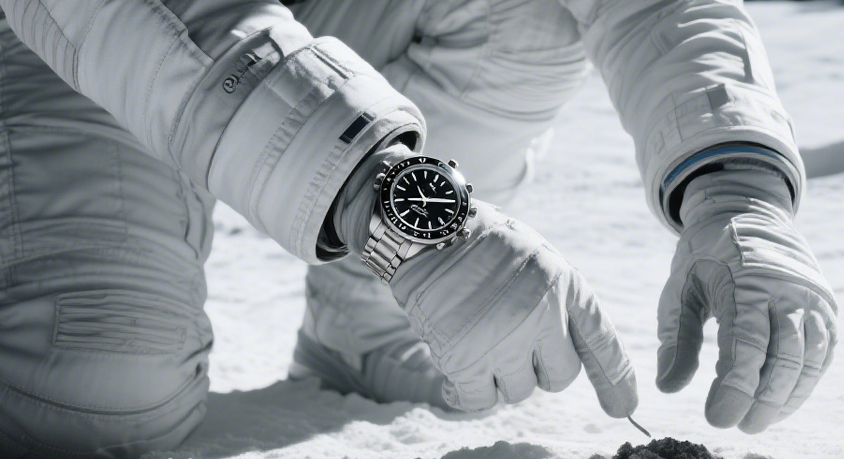
Open a 1965 reference 105.003. Behold Caliber 321—a column-wheel chronograph movement with the structural elegance of a suspension bridge. Each bridge chamfered by hand; each jewel set in gold chatons like cockpit instruments. Its robustness defies delicacy: during NASA’s "torture tests," it endured 48 hours at 71°C followed by 30 minutes at 93°C, then froze at -18°C—all while vibrating at 10,000 Hz. Yet its soul remains human-scale. Wind the crown. Feel the buttery resistance, hear the mainspring’s low thrum—a sound Buzz Aldrin described as "Earth’s heartbeat in my ear during EVA."
Modern iterations honor this duality. The 2021 Caliber 321 reissue recreates every historic component—even sourcing Sedna™ gold for the column wheel from the same Swiss foundry that supplied 1965. Meanwhile, the Co-Axial Master Chronometer variants offer anti-magnetic shields defying 15,000 gauss—protection not from cosmic rays, but MRI machines and laptops.
Dr. Eva Hartmann, a neurosurgeon in Munich, operates with her 1968 ST105.012: "Its manual wind ritual centers me before slicing brain tissue. That Hesalite fog reminds me clarity survives chaos." Retired test pilot Jim "Hawk" Hawkins still wears his Apollo-era issue: "We called it the ‘crisis counter.’ Timing reentries or my daughter’s chemotherapy drips—it never flinches." Then there’s Maya Chen, a Tokyo jazz drummer whose Speedmaster Reduced rides her stick hand: "The subdials swing like cymbals. It taught me precision isn’t rigid—it’s rhythm."
Connoisseurs hunt transitional quirks. The "Dot Over 90" bezels (pre-1970) where the tachymeter’s 90 sits above the dot, not beside it. The "Applied Logo" dials of the 1980s—Omega’s constellation badge riveted, not printed. The ultra-rare "Alaska Project" prototypes with white thermal shields, designed for lunar nights when temperatures plunge to -160°C. Notice the bracelet evolution: flat-link "Jumbo" rivets (1957) to tapered "Twisted" (1964) to current "Five-Axis Brushed" links echoing spaceship hull plating.
Winding: Hand-wind daily at dawn—40 turns minimum. Feel the mainspring tension like a bowstring drawn
Cleaning: Post-beach or lab work, rinse under lukewarm water. Dry with microfiber cloths, polishing Hesalite with toothpaste (yes, really) to erase cloudiness
Storage: Rest in watch winders only if automatic. Manuals prefer stillness—their power reserve is meditation
Service: Every 5 years at Omega’s METAS-certified centers. Request original MoSH lubricant for vintage 321s
In an age of smartwatches beeping for attention, the Speedy endures because it’s more than technology—it’s theology. Its value isn’t in complications, but in having been complicated with. That scratch on your Hesalite? It mirrors Armstrong’s visor abrasions from lunar dust. The lume fading to parchment? Echoes of radioactive courage. Omega didn’t make a chronograph; they bottled human audacity.
When you strap that steel bracelet tight before a boardroom pitch or night launch, you’re not wearing a watch. You’re armoring your pulse with the same machine that timed freedom’s fall across the Berlin Wall, counted contractions during home births, and measured the 14 seconds that saved three astronauts adrift in the infinite. The Moonwatch doesn’t tell time—it witnesses how we spend our courage. After all, isn’t the ultimate luxury knowing your seconds hold stardust?
MORE FROM WIRED
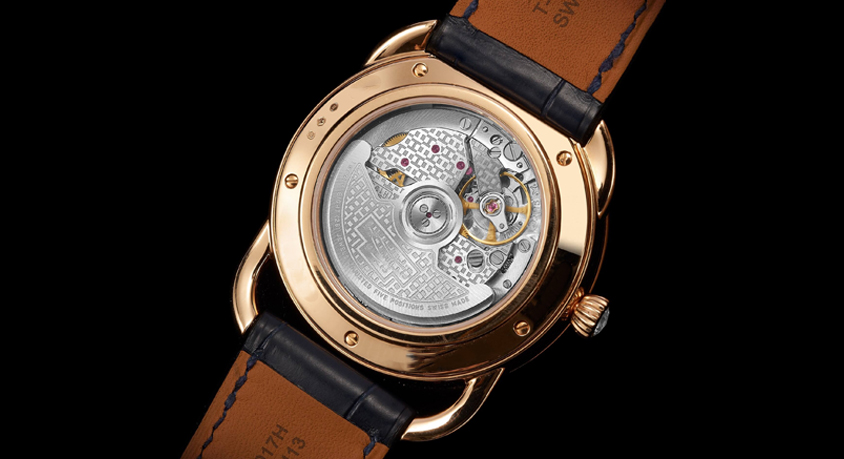
- Hermès Arceau: Stirrups in Time—The Elegance of Asymmetry Woven in Metal
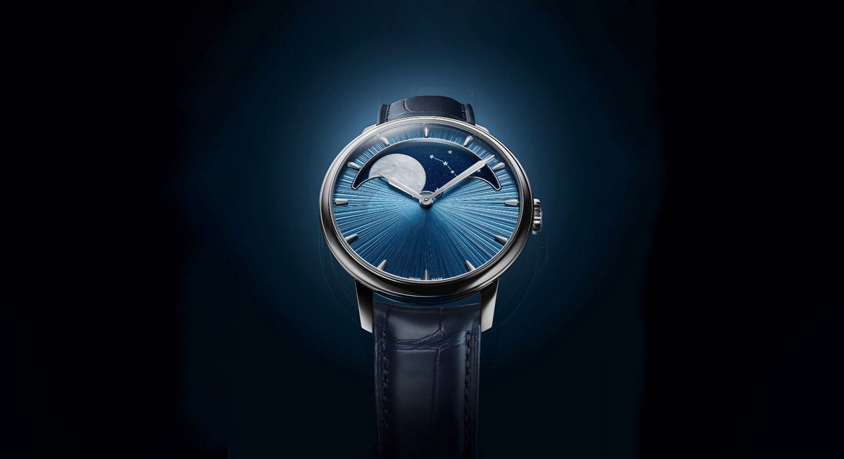
- Arnold & Son HM Perpetual Moon: A Sky Unfolded—Where the Moon Dances on a Sea of Stars
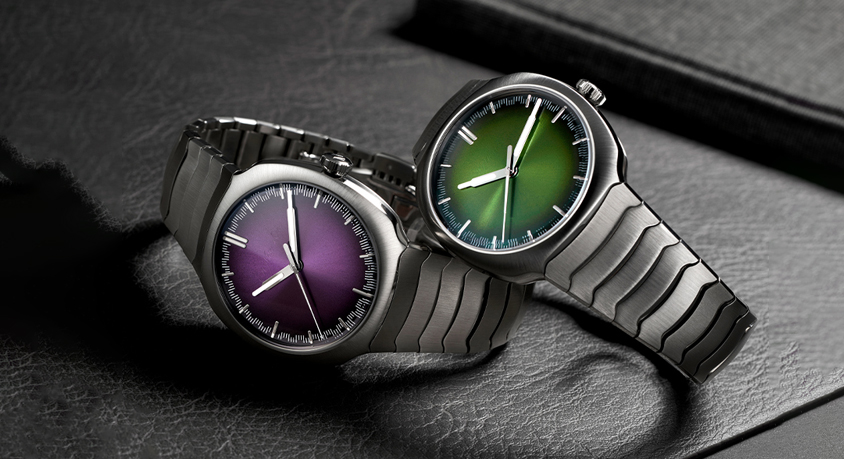
- H. Moser & Cie Streamliner: A Chain of Time Woven—Retro Curves, Future Glow
- Sep,01,2025
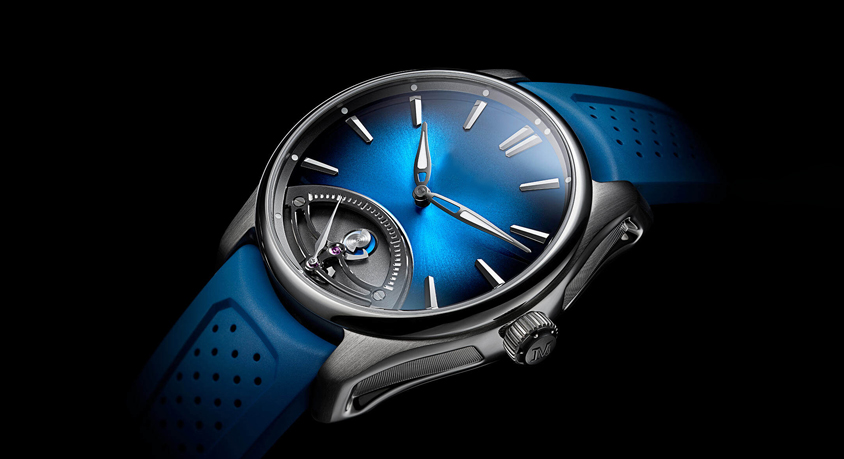
- H. Moser & Cie Endeavour: Time Stripped Bare—The Quiet Luxury of a Smoked Dial
- Aug,25,2025

- Chanel Comète: Asymmetric Celestial Whispers That Dance on the Ear
- Aug,18,2025
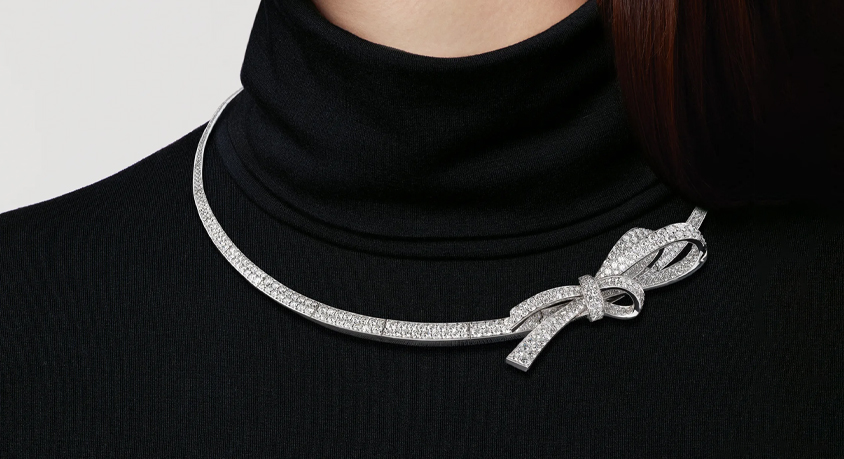
- Chanel Ruban: A Diamond Ribbon Bow That Ties Time in Elegance
- Aug,11,2025
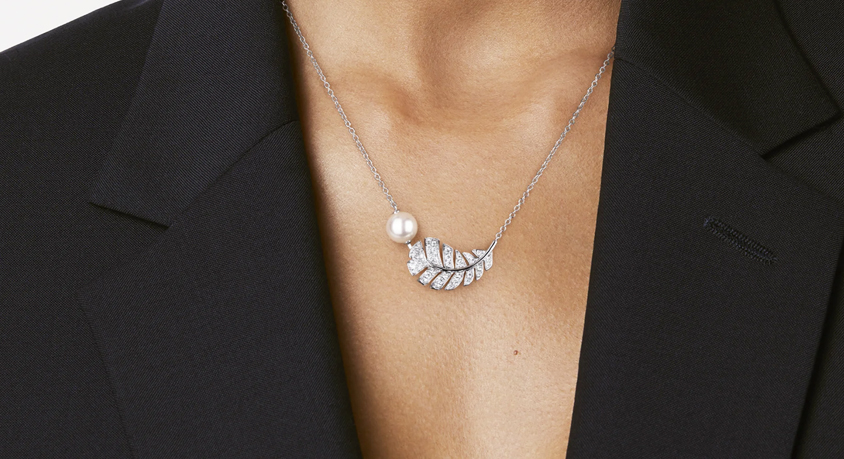
- Chanel Plume de Chanel: Where Diamonds Take Flight—Feathers Woven in Light
- Aug,04,2025