Your GoPro called — it wants you to stop filming like a potato
Strap a tiny camera to your helmet, chest, or even your surfboard, and suddenly every puddle, tree branch, and pebble thinks it’s auditioning for a Hollywood stunt. Your mountain bike ride could look like a high-budget commercial… or a dizzying amateur horror show. The difference? Angles, movement, and a few sneaky tricks that make even your wipeouts look watchable.
Chest mounts throw viewers right into your adrenaline-fueled heartbeat; helmet mounts mimic exactly where your eyes go. Handlebars, selfie sticks, or even body mounts add a different flair — a tiny tilt forward or back can turn chaotic footage into cinematic gold. And yes, sometimes your knee or elbow sneaks into the frame, but that’s just extra “character.”
Fast action loves framing and composition. Skiing past trees, dodging rocks, or landing jumps? Leave some space ahead in the shot. Backgrounds count as co-stars — shimmering lakes, jagged cliffs, even dramatic cloud formations make ordinary moves look like movie stunts. Following natural lines in the landscape keeps your footage from looking like a rollercoaster crash reel.
Shaky footage? Instant nausea for viewers. Gimbals and stabilizers are lifesavers. Don’t have one? Slow, deliberate hand movements reduce shake significantly. And don’t forget horizon alignment — a tilted horizon is fun for a second, but constant leaning makes your audience seasick.
Frame rate is a secret weapon. Shooting at 60 or 120 fps lets you slow down epic jumps without turning motion into a jelly mess. Lower frame rates can work for storytelling, but for fast sports, more frames per second = more smooth slow-motion glory. Combine this with wide-angle lenses to capture more of the scene, but watch for distortion; sometimes stepping back or adjusting your mount angle is enough to fix the “funhouse mirror” effect.
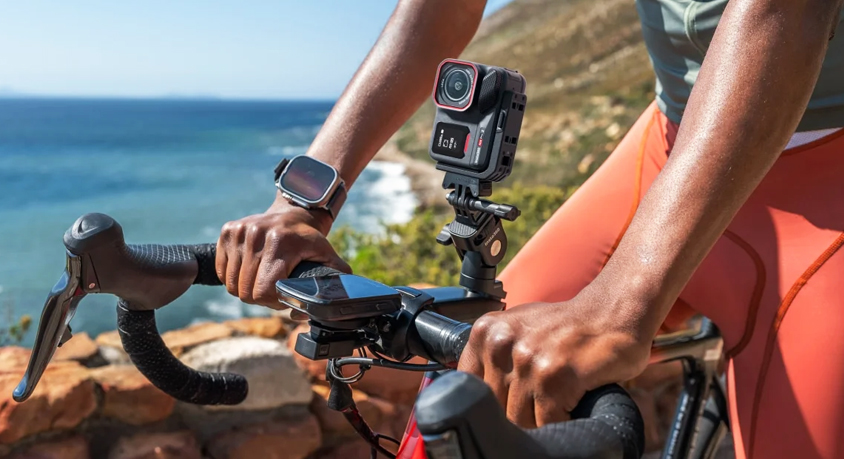
Lighting is a tricky beast. Sun blazing one second, shadows stretching the next. Early mornings and late afternoons provide golden-hour magic, making snow sparkle or waves glisten. Manual exposure adjustments help avoid overexposed skies or underexposed shadows, and some cameras let you tweak ISO and shutter speed even mid-run — a small tweak that makes your snowboarding tricks look sharp instead of washed out.
Sound adds immersion, though wind is a natural antagonist. Capturing rushing water, tire crunch on gravel, or the squeak of climbing gear makes videos feel alive. Wind filters help, but sometimes raw ambient noise adds authenticity — like nature yelling at you while you pretend to be fearless.
Advanced tricks: timelapse and hyperlapse can compress long trails or flights into cinematic sequences, while burst mode captures that perfect jump frame when your reaction time fails. Experiment with slow panning and point-of-interest tracking — these little touches make viewers feel like they’re riding along with you, not just watching a shaky camera follow you.
Editing is where it all comes together. Music synced to motion, speed ramps, and careful cut selection can transform “meh” footage into a short epic. Clips that looked ordinary raw often gain dramatic tension and humor through timing.
Extreme sports are unpredictable. One jump becomes cinematic perfection, another flop turns into accidental slapstick. Cameras are neutral witnesses — your creativity turns chaos into story. Strap in, point the camera, roll, and embrace the adventure. With the right angles, stabilization, frame rates, and a pinch of humor, even the tiniest action camera can make your day feel like a blockbuster.And hey — if it all goes wrong, at least the footage is funny.