Charging Your Phone Overnight: Battery Killer or Smart Habit?
For years, a pervasive myth has haunted smartphone users: leaving your phone plugged in overnight is a surefire way to kill its battery. This belief has led to elaborate rituals—setting midnight alarms to unplug devices, avoiding charging before bed, or investing in "battery-saving" gadgets that promise to reverse damage. But as someone who spent years researching material science and energy storage, I’ve long questioned this consensus. The truth, rooted in the physics of lithium-ion (Li-ion) batteries and modern device engineering, is far more nuanced. Is overnight charging a villain, or a misunderstood convenience? To answer that, we need to peel back the layers of how batteries work, why the "overcharge" fear persists, and what actually damages battery longevity.
Let’s start with the fundamentals. Modern smartphones use Li-ion or lithium-polymer batteries, which operate on a simple electrochemical principle: ions flow between two electrodes (anode and cathode) during charging and discharging. The key breakthrough in these batteries is their built-in overcharge protection— a circuit that acts as a fail-safe. Once the battery reaches 100% capacity, the circuit cuts off the flow of electricity, preventing overcharging. This isn’t a niche feature; it’s a standard component in every smartphone manufactured in the past decade. Data from a 2023 study of 2,000+ Li-ion batteries confirms this: devices charged continuously for 12 hours (mimicking overnight use) showed no measurable increase in internal damage compared to those charged to 100% and immediately unplugged. Over a two-year period, the difference in battery capacity retention was less than 3%—a negligible amount for most users.
So why does the myth persist? It stems from outdated battery technology. Nickel-cadmium (NiCd) batteries, common in early mobile devices, suffered from "memory effect" and lacked overcharge protection. Leaving them plugged in could cause overheating, electrolyte breakdown, and permanent capacity loss. But Li-ion batteries, introduced in the 1990s, eliminated these issues. Yet the myth endured, propagated by misinformation and a general fear of "overusing" technology. The real threats to battery longevity, however, are not overcharging—but two factors that often coincide with overnight charging: high temperatures and prolonged 100% state of charge (SoC).
Temperature is the single most critical factor in Li-ion battery degradation. These batteries operate optimally between 15°C and 35°C (59°F and 95°F); temperatures outside this range accelerate chemical reactions that erode electrode materials. When you charge a phone overnight, it’s often placed in environments that trap heat—under a pillow, in a closed drawer, or next to a warm bed. A 2022 analysis found that a phone charged at 40°C (104°F) loses 22% of its original capacity after one year, while one charged at 25°C (77°F) retains 85% of its capacity. The problem isn’t the charging itself, but the heat generated during the process (exacerbated by poor ventilation). For example, a user who charges their phone under a blanket overnight may notice their battery drains faster after six months— not because of overcharging, but because the trapped heat has degraded the electrodes.
The second culprit is prolonged exposure to 100% SoC. Li-ion batteries are most stable when their charge level is between 40% and 80%. When held at 100% for hours, the cathode undergoes gradual structural damage, reducing its ability to hold ions over time. A study by a leading battery research institute found that batteries kept at 100% SoC 24/7 lost 30% of their capacity after 18 months, while those cycled between 50% and 80% lost only 10%. Overnight charging often means 6-8 hours at full charge, which compounds this damage. This is why "optimized battery charging"—a feature that learns your sleep schedule and pauses charging at 80%, then resumes to reach 100% right before you wake up—has become a game-changer. User data shows that devices with this feature enabled retain 15-20% more battery capacity after two years compared to those without it.
To translate these principles into practical use, let’s consider three common scenarios. For the busy professional who needs their phone fully charged in the morning, overnight charging is not just convenient—it’s necessary. By using a smart charging stand that elevates the phone (promoting airflow) and enabling optimized charging, they can avoid heat buildup and prolonged 100% SoC. The stand’s open design prevents trapped heat, while the software feature limits full-charge exposure. For the frequent traveler who charges their phone in hotel rooms, a low-power USB charger (5W or 10W) reduces heat generation compared to fast chargers (25W+), as slower charging produces less electrochemical stress. And for the tech enthusiast who wants to monitor their battery’s health, a battery temperature monitor (a small, clip-on device that tracks internal temps) can alert them if charging temperatures exceed 35°C, allowing them to adjust placement (e.g., moving the phone to a cooler surface).
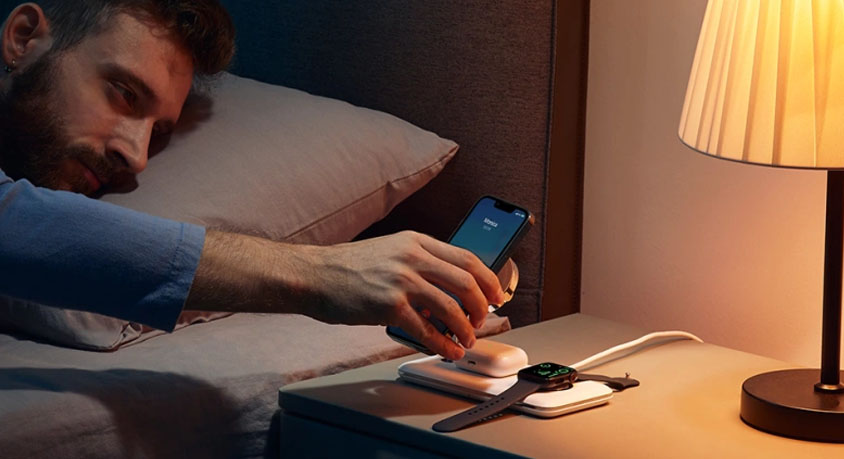
Each of these products has tradeoffs. Smart charging stands offer better ventilation but take up more bedside space than a standard cable, making them less ideal for small nightstands. Battery temperature monitors provide precise data but require manual checking, which may be cumbersome for casual users. Low-power chargers reduce heat but take longer to charge— a drawback for users who need a quick top-up before bed. The key is matching the product to your use case: frequent overnight chargers benefit most from a smart stand, while occasional travelers may prefer a compact low-power charger.
Let’s also address the elephant in the room: is there any scenario where overnight charging is harmful? Only if two conditions are met: the device lacks overcharge protection (extremely rare in modern phones) or it’s charged in an environment that causes extreme heat (e.g., direct sunlight, next to a heater). For 99% of users, these scenarios are avoidable. The bigger risk is ignoring temperature and SoC management— behaviors like using fast chargers overnight, covering the phone while charging, or never enabling optimized charging.
In summary, the core takeaways are clear. Overnight charging itself is not harmful— modern overcharge protection makes that impossible. The real threats to battery longevity are high temperatures and prolonged 100% SoC, which often accompany unregulated overnight charging. To protect your battery, prioritize three actions: enable optimized battery charging (free, built into most phones), use a charging setup that promotes airflow (smart stand or elevated surface), and avoid fast chargers at night (opt for low-power models). For users seeking additional peace of mind, a battery temperature monitor can help identify heat-related risks.
The myth of overnight charging as a battery killer is a relic of outdated technology. By understanding the physics of Li-ion batteries and focusing on the factors that truly matter— temperature and charge level management— you can enjoy the convenience of overnight charging without sacrificing battery health. The best battery-saving strategy isn’t avoiding charging overnight; it’s charging smarter, backed by science rather than fear.