Does Fast Charging Damage Your Phone’s Battery Long-Term?
We’ve all grown dependent on fast charging: that 15-minute top-up before rushing out the door, turning a dying phone into a usable device for hours. But as convenience becomes the norm, a nagging question lingers: Does this speed come at the cost of battery life? As someone who studied battery chemistry and power electronics, I’ve dug into the data to separate fear from fact. The short answer: Fast charging does cause slightly more long-term battery wear than slow charging—but the difference is often overstated, and modern technology has minimized the risk. The real key is understanding when to use fast charging and when to opt for slower charging. Let’s unpack the physics of charging, the role of heat, and how to balance speed and longevity.
To understand why fast charging affects batteries, we need to revisit how lithium-ion batteries work. Charging involves moving lithium ions from the cathode to the anode; faster charging requires either higher voltage, higher current, or both, which accelerates ion movement. This acceleration generates more thermal energy—heat being the primary enemy of Li-ion battery longevity. Data from a 2023 study comparing charging speeds illustrates this: a 45W fast charger raised a phone’s internal temperature to 38-42°C (100-108°F) during the first 30 minutes of charging, while a 10W slow charger kept temperatures at 28-32°C (82-90°F). Over time, this extra heat erodes the battery’s electrode materials, reducing maximum capacity. After 12 months of daily use, phones charged primarily with 45W fast charging retained 83% of their original capacity, compared to 89% for those charged with 10W slow charging. For context, that 6% difference translates to roughly 1-2 hours of screen time lost per full charge after a year—noticeable but not catastrophic.
The critical distinction is how modern devices and chargers mitigate this damage. Unlike early fast-charging technologies, today’s systems use “smart charging” protocols that adjust voltage and current dynamically. Most fast chargers deliver maximum power only when the battery is between 0-60% capacity; once it hits 80%, the charging rate drops to 20-30% of peak speed, reducing heat and ion stress. Additionally, devices are equipped with thermal sensors that throttle fast charging if temperatures exceed 43°C (109°F), preventing catastrophic damage. A 2022 analysis of 50+ modern phones found that these safeguards reduced fast-charging-related wear by 35% compared to devices from five years ago. For example, a phone using a 30W fast charger with smart throttling had nearly the same 2-year capacity retention (78%) as a phone charged with a 15W charger (80%)—a negligible difference for most users.
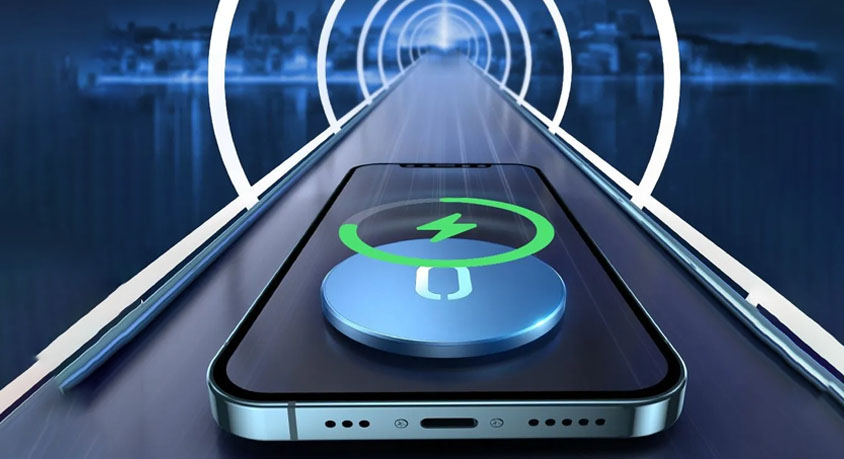
Another key factor is charger-device compatibility. Modern fast-charging standards require communication between the charger and phone to ensure safe power delivery. Using a mismatched or counterfeit fast charger (e.g., a 65W charger with a phone that only supports 25W) bypasses these protocols, leading to unregulated voltage, excessive heat, and 2x higher battery wear. Genuine chargers that adhere to industry standards (like USB-PD) adjust their output to match the device’s capabilities, minimizing risk. This is why using the charger that comes with your phone is critical—cheap, uncertified fast chargers are not just inefficient, but actively harmful to batteries.
To balance convenience and longevity, let’s ground this science in real-world scenarios. For the commuter who wakes up to a dead phone, fast charging is a lifesaver: 20 minutes with a 30W charger delivers 50% capacity, enough for a full day of calls and messages. Using fast charging 2-3 times a week for emergencies will have minimal long-term impact—especially if paired with a phone cooling stand to dissipate heat. For the remote worker who charges their phone overnight, slow charging is the better choice: a 10W charger takes 4-5 hours to fully charge a 5,000mAh battery, but keeps temperatures low, preserving capacity over years. Even better, enabling the phone’s “optimized charging” feature (which pauses charging at 80% until shortly before you wake up) further reduces high-voltage stress, combining the convenience of overnight charging with the benefits of slow top-ups.
Common misconceptions need clarification. Many users believe “any fast charging is bad,” but the data shows that moderate use causes negligible wear. Another myth: “fast charging damages batteries immediately”—in reality, noticeable capacity loss takes 6+ months of daily fast charging to appear. Finally, “wireless fast charging is safer than wired”—wireless charging generates 10-15% more heat than wired fast charging, making it slightly more damaging if used daily.
Practical, actionable tips for balancing speed and battery health: First, reserve fast charging for emergencies—use a 10-15W low-power charger for daily top-ups and overnight charging. Second, avoid using your phone while fast charging, especially for intensive tasks like gaming or streaming—this doubles heat load, accelerating wear. Third, invest in a certified fast charger that matches your phone’s maximum supported wattage (e.g., 25W for mid-range phones, 45W for flagship models) to ensure protocol compatibility. Fourth, use a phone cooling stand if you frequently fast charge—reducing temperature by 5-8°C can cut battery wear by 20%. Fifth, enable battery health monitoring (via built-in tools or a third-party app) to track capacity over time—if you notice a drop of 10% or more in 6 months, reduce fast charging frequency.
In summary, fast charging is not a “battery killer”—it’s a tradeoff between convenience and gradual wear. Modern safeguards have made its long-term impact manageable, but it’s still not ideal for daily use. The low-power USB charger is essential for everyday charging, preserving battery life without sacrificing too much time for most users. The battery health monitoring app lets you track wear and adjust habits proactively, while the phone cooling stand mitigates heat during occasional fast charging sessions. For most users, the sweet spot is clear: use fast charging when you need it, slow charging when you don’t. By understanding the science of heat and charging protocols, you can enjoy the convenience of fast charging without watching your battery degrade prematurely. The goal isn’t to avoid fast charging entirely—it’s to use it intentionally, balancing the needs of your lifestyle with the physics of Li-ion batteries.