Does Phone Screen Light Really Ruin Your Sleep?
It’s a universal routine: scrolling through your phone in bed, only to lie awake for hours wondering why sleep won’t come. The claim that phone screen light disrupts sleep is everywhere—but is it rooted in science, or just another tech myth? The truth is undeniable: phone screens emit blue light (400-500nm) that disrupts your body’s natural sleep cycle by suppressing melatonin, the “sleep hormone.” The good news is that simple adjustments—night shift modes, black-and-white display, or a pre-sleep phone break—can mitigate the damage without giving up your device. Let’s unpack the mechanisms, data, and practical solutions.
To understand the impact, we first need to grasp how your body’s clock works. Your brain’s suprachiasmatic nucleus (SCN), the master circadian controller, responds to light signals from the retina. In natural conditions, sunlight (rich in blue light) suppresses melatonin during the day, keeping you alert. As dusk falls, blue light fades, melatonin levels rise, and you feel sleepy. Phone screens mimic sunlight’s blue light—specifically wavelengths around 464nm, which are most effective at triggering the SCN’s “daytime” signal. This tricks your brain into delaying melatonin release, even when it’s time to wind down.
Data from sleep research paints a clear picture. Studies show that just two hours of phone use before bed can reduce melatonin secretion by 55.7%, while even 30 minutes of exposure cuts it by over 50%. The result is tangible: people who use phones before bed take 30-45 minutes longer to fall asleep, and their deep sleep—critical for memory consolidation and body repair—drops by 40%. For teenagers, whose retinas are more transparent to blue light, the effect is amplified: pre-sleep phone use delays their already-shifted circadian rhythms by an additional 1.5 hours, worsening the “night owl” effect that conflicts with early school start times. Research comparing red and blue light exposure found that after three hours of nighttime use, blue light kept melatonin levels at just 7.5 pg/mL, while red light allowed recovery to 26.0 pg/mL, highlighting the unique disruptive power of blue wavelengths.
The physical design of phones exacerbates the issue. Modern smartphones feature bright, high-contrast screens (typically 400-1000 nits for global typical brightness, with peak values reaching 1500 nits or more) with LED backlights that emit significant blue light. Their compact size means users hold them 12-18 inches from their faces—closer than any other screen—maximizing retinal exposure. Even in dark rooms, where pupils dilate to let in more light, the blue light penetrates deeper into the eye, intensifying its signal to the SCN. This combination of proximity, brightness, and wavelength makes phone screens uniquely potent circadian disruptors.
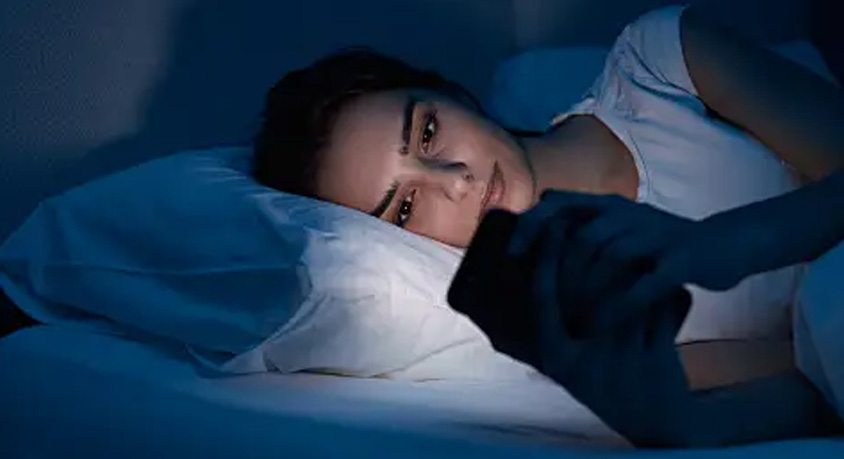
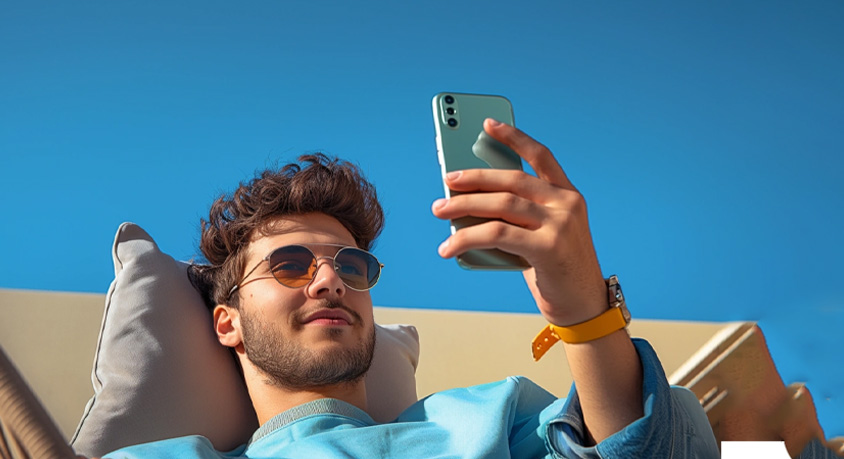
Real-world scenarios highlight the consequences. A remote worker who scrolls through emails in bed notices they’re always tired, even after 8 hours of sleep—their sleep tracker shows fragmented deep sleep, a direct result of blue light exposure. A college student who binges short videos before bed struggles to wake up for morning classes, with their melatonin levels peaking at 3 AM instead of 11 PM. Conversely, a parent who switches their phone to black-and-white mode an hour before bed reports falling asleep 20 minutes faster and waking up more refreshed. For shift workers, whose circadian rhythms are already disrupted, adding pre-sleep phone use increases the risk of chronic fatigue and sleep disorders.
Solutions work by targeting blue light or its impact on the circadian system. Night shift (or blue light filtering) modes adjust the screen’s color temperature, reducing blue light output by 30-50% and shifting from cool (5000K+) to warm (2700K-3000K) hues similar to candlelight or incandescent bulbs. These modes are easy to activate, either manually or on a schedule, and while they slightly distort color accuracy, they’re perfect for reading, social media, or streaming. Black-and-white “bedtime modes” go further, eliminating all color wavelengths and cutting blue light exposure by over 90%—ideal for users who prioritize sleep over visual fidelity. The most effective fix, though often the hardest, is a 60-minute phone break before bed: this gives the SCN time to reset and melatonin levels to rise naturally.
Accessories like blue light filtering glasses complement these software solutions. High-quality pairs filter 30-60% of blue light without excessive color distortion, making them useful for users who need to use phones late for work or caregiving. Light-blocking phone cases reduce screen glare in dark rooms, lowering the need for high brightness (which amplifies blue light output). Auto-night mode activators sync with your local sunset, ensuring you never forget to switch modes—critical for building consistent habits. Studies show that combining blue light glasses with night shift mode can reduce melatonin suppression by an additional 25%, compared to using either solution alone.
Like any solution, these approaches have tradeoffs. Night shift mode preserves color usability but offers less protection than black-and-white mode. Black-and-white mode is most effective but makes tasks like photo editing or video watching less enjoyable. Blue light glasses add a physical barrier but require remembering to wear them. The 60-minute phone break is scientifically optimal but demands willpower, especially for those used to using phones as a sleep aid. These solutions are ideal for anyone struggling with insomnia, early-morning fatigue, or circadian misalignment—from students to shift workers. They’re less necessary for users who already limit phone use before bed or sleep in well-lit rooms (though even then, blue light still has a mild impact).
Practical guidance for balancing phone use and sleep: First, set your phone to auto-activate night shift mode 2 hours before your target bedtime. Second, switch to black-and-white mode for the final hour before sleep. Third, keep your phone at least 18 inches from your face and reduce brightness to 30% or lower in dark environments—aiming for 10-50 nits, a level that’s visible but not stimulating. Fourth, use blue light filtering glasses if you must use your phone late for work. Fifth, track your sleep with a wearable or app to measure improvements—data-driven feedback makes it easier to stick to habits.
In summary, phone screen light—specifically blue light—does disrupt sleep by suppressing melatonin and misaligning circadian rhythms. The data is clear: even moderate evening phone use delays sleep onset, reduces deep sleep, and causes daytime fatigue. Fortunately, simple, low-cost solutions exist: night shift modes, black-and-white bedtime modes, blue light glasses, and pre-sleep phone breaks. These tools let you enjoy the convenience of your phone without sacrificing sleep quality. The key is understanding that the issue isn’t phone use itself, but unmanaged blue light exposure—with the right habits, you can have both.